

New Master's in Business Informatics Approved
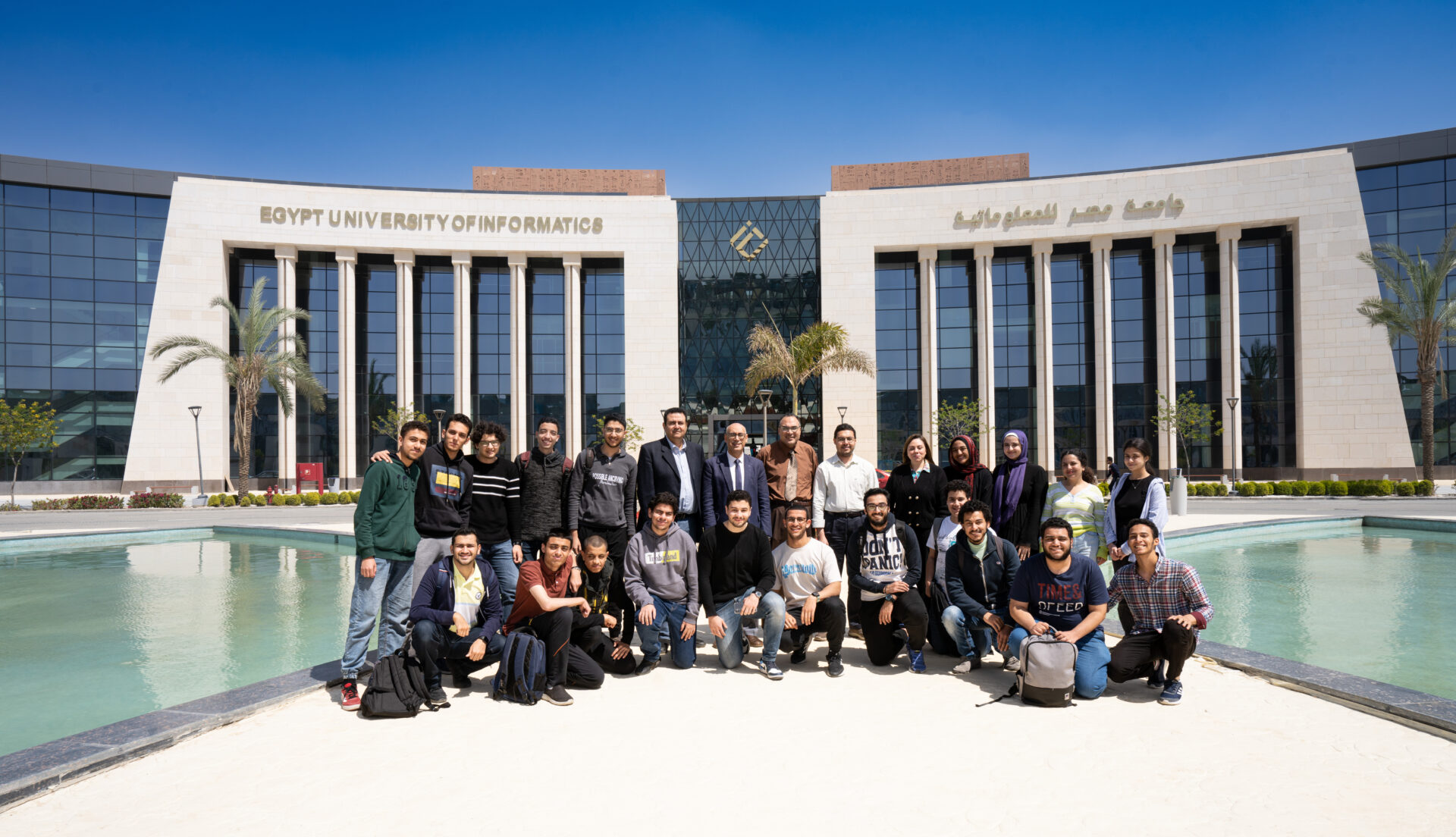
The Supreme Council of Universities has approved the regulations for a new academic Master's program in Business Informatics, submitted by the Faculty of Business Informatics at Egypt University of Informatics (EUI). The approval makes it the second faculty at the university to have a postgraduate program officially accredited by the Council, following the Faculty of Computer Science and Information.
Prof. Ahmed Hamad, Acting President of EUI, said the new program covers three main specializations: Business Technology Management, Business Analytics, and Digital Marketing. It follows a credit-hour system, with each specialization comprising four compulsory courses and six specialized courses, in addition to a thesis prepared according to recognized academic standards and methodologies.
He noted that the program represents a valuable addition to Egypt's postgraduate education landscape, combining management science with information technology in an academic and research-oriented framework. It aims to produce researchers and specialized professionals capable of identifying research problems, applying scientific methodologies, analyzing data, and using research findings to support institutional development and the digital economy.
Prof. Mohamed Saleh, Dean of the Faculty of Business Technology, said the Master's program relies heavily on case studies and applied projects, helping students sharpen their ability to make complex, multidimensional decisions under conditions of uncertainty — risks that have grown amid today's regional and international conflicts, which place unprecedented pressure on both the global and local economies. He added that the program is designed to equip graduates with the skills needed to lead diverse, multidisciplinary teams.
Regarding career and research paths available to graduates, Prof. Saleh explained that the program prepares students for 13 professional tracks, including digital transformation, technology management, entrepreneurship, innovation management, strategic planning for digital transformation, IT governance and security, digital risk management and business continuity, digital marketing, digital customer relationship management, and business systems analysis.
He added that these tracks combine both professional and research dimensions, enabling graduates to take up specialized and leadership roles in public and private institutions, while also providing the academic and methodological foundation needed to pursue further studies, including PhD programs in these or related fields.