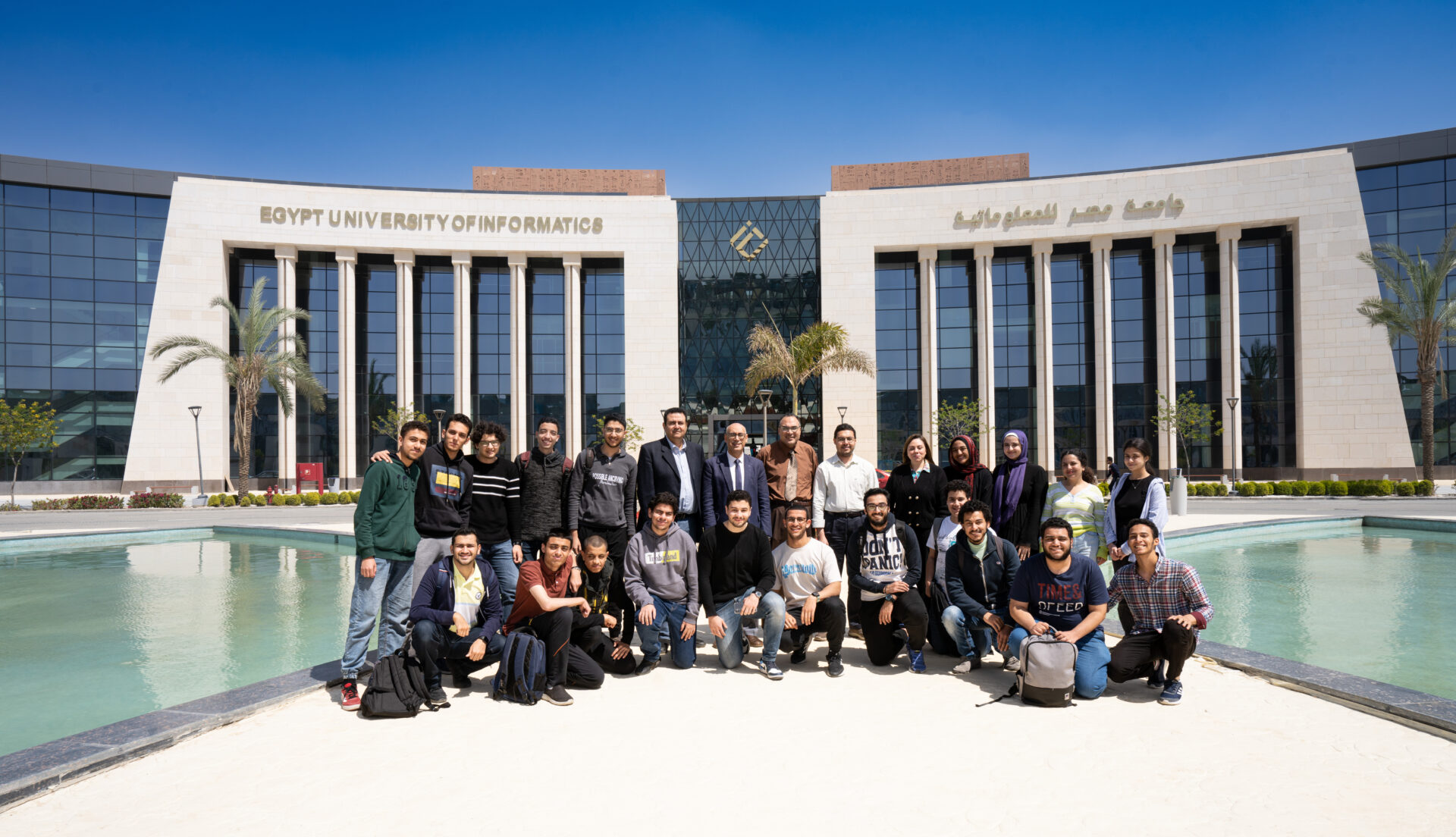


EUI Celebrates Graduation of First AI and Big Data Training Cohort
Egypt University of Informatics (EUI) celebrated the graduation of the first cohort of a specialized training program prepared by Teradata Egypt, aimed at building the capabilities of the university’s students and graduates in the fields of big data analytics and artificial intelligence.
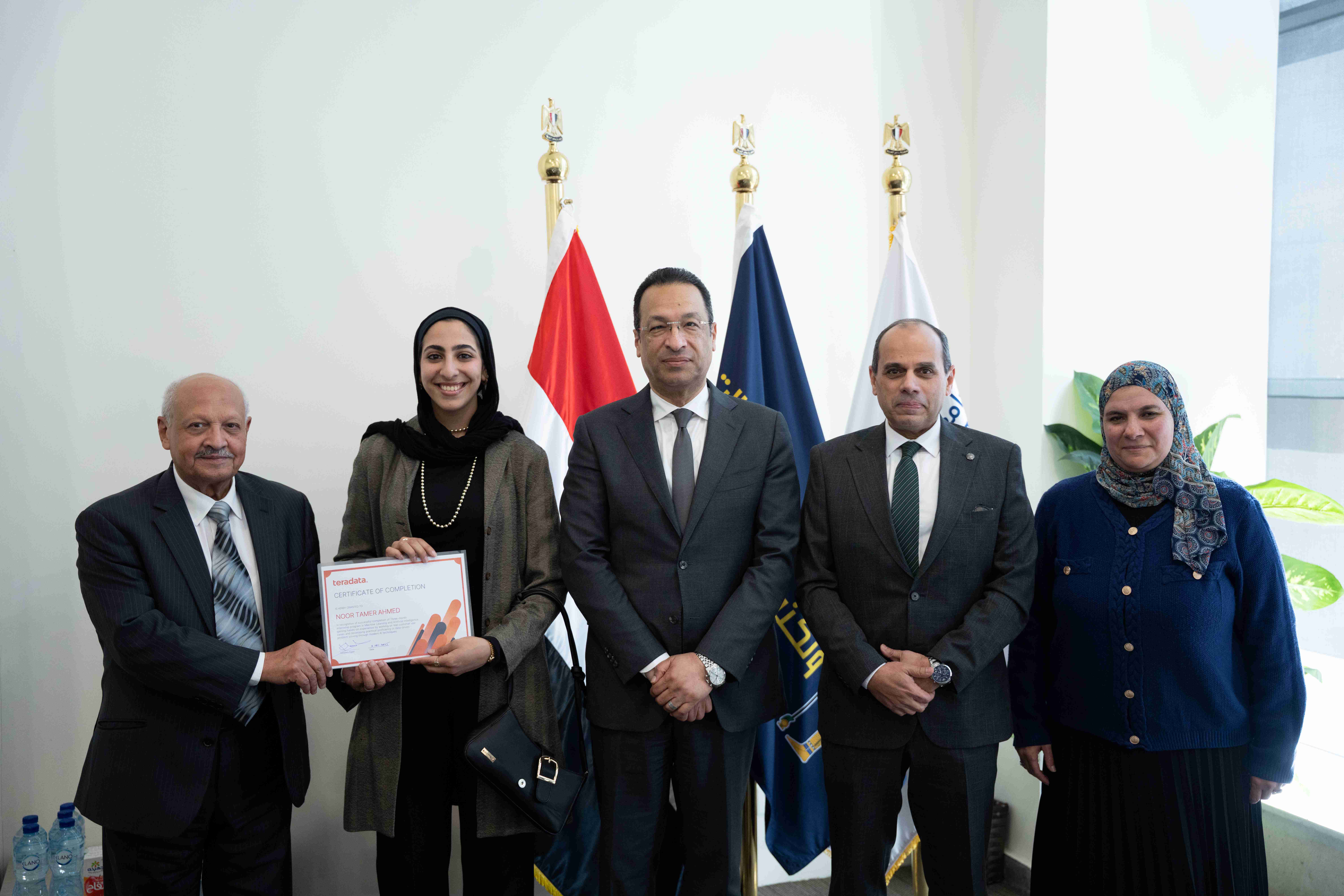
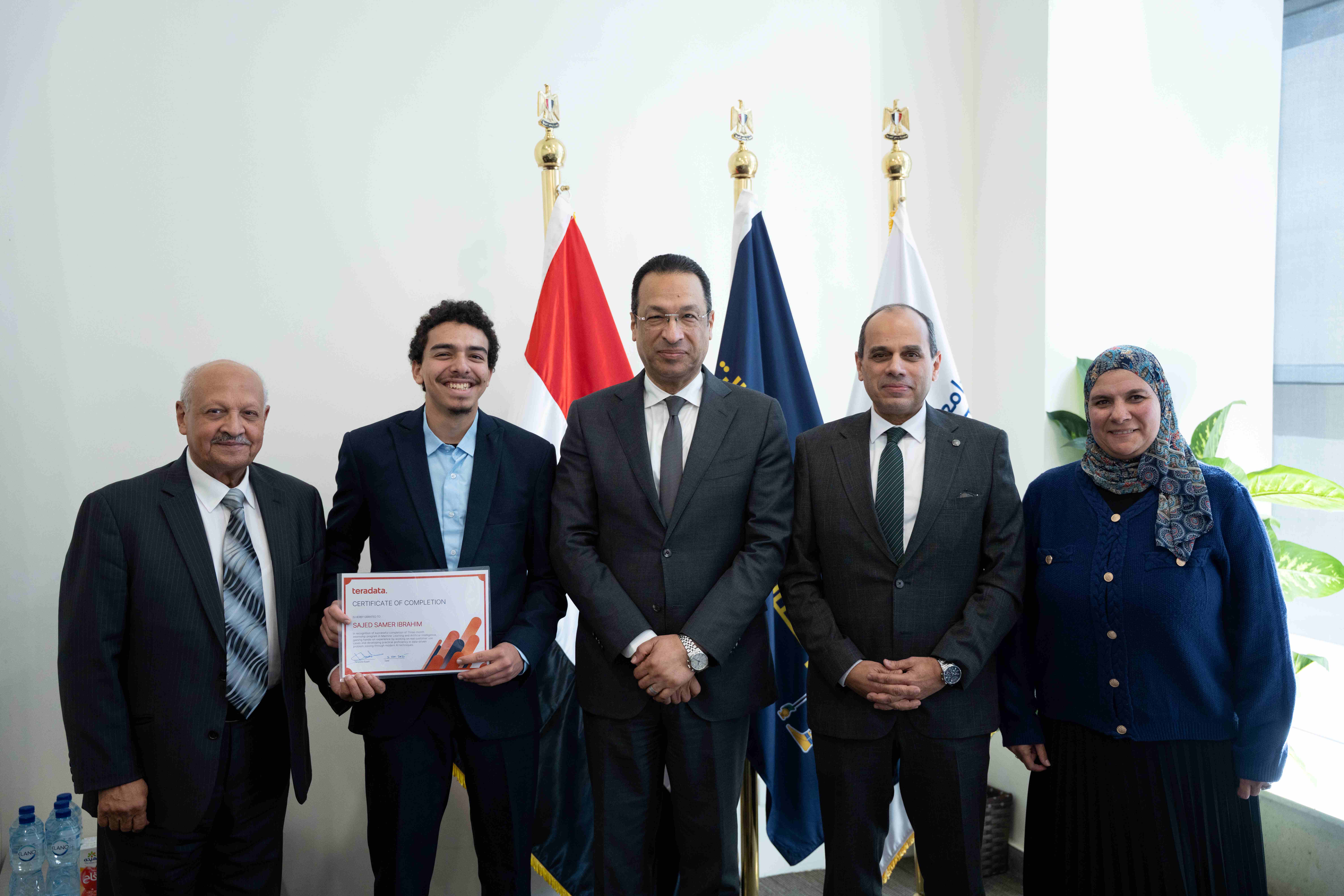
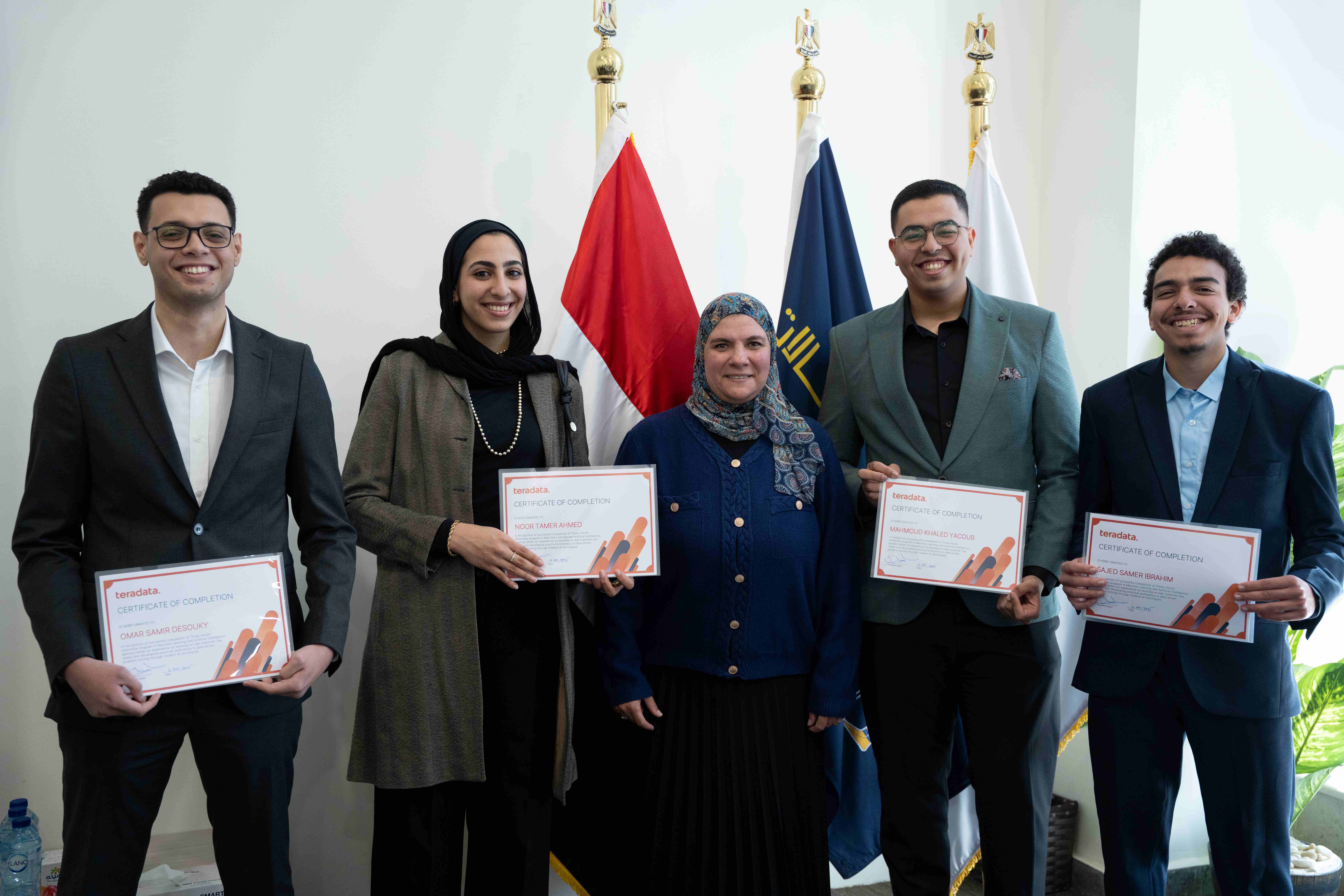
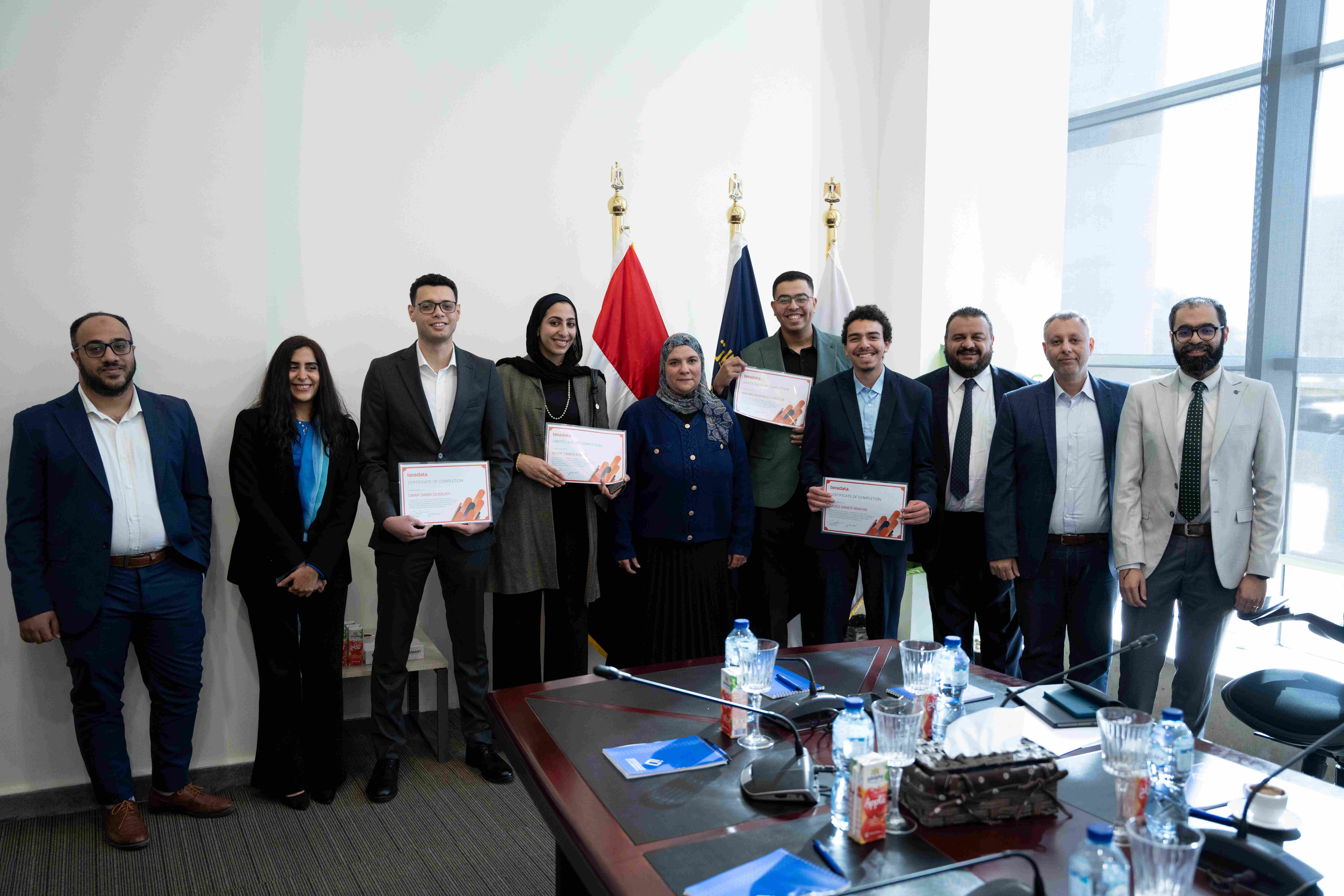
During the ceremony, Eng. Raafat Hindi, Deputy Minister of Communications and Information Technology for Technological Infrastructure Development and Digital Transformation, and Vice Chairman of the Board of Trustees of Egypt University of Informatics, presented certificates to the program graduates after they successfully completed the practical training and presented their applied projects in artificial intelligence and data analytics.
In his speech, Eng. Raafat Hindi emphasized EUI’s commitment to developing the skills of its students and graduates by offering hands-on training programs in cooperation with leading global and local companies, to refine their skills and enhance their competitiveness in both local and regional labor markets. This, he noted, contributes to supporting the government’s digital transformation strategy, led and implemented by the Ministry of Communications and Information Technology.
Eng. Hindi stated that EUI is betting on practical training programs—such as the program implemented with Teradata—to boost the competitiveness of its graduates through full professional immersion within the company and participation in real projects in the government sector that support the transition toward the digital economy. Trainees participated in two pioneering projects based on artificial intelligence and data science.
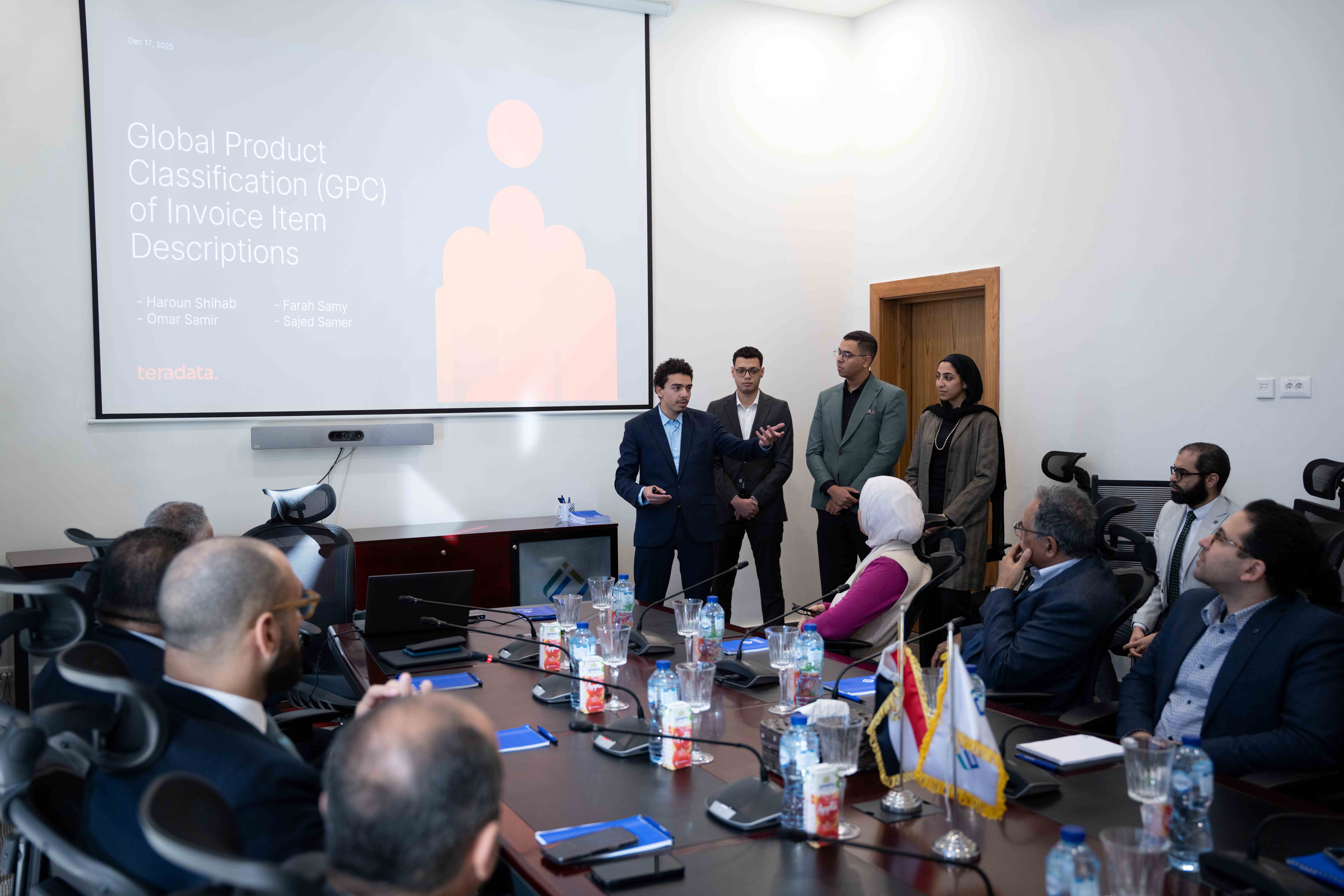
The first project focused on developing an AI-based system that classifies goods and generates accurate descriptions according to the international standard commodity classification system, with high accuracy based on purchase invoices that do not originally apply global standard classifications.
He explained that this classification helps convert unstructured textual data into structured, analyzable data, enabling the preparation of accurate reports, advanced analytics, and the effective deployment of AI and machine learning solutions. It also enhances regulatory compliance, increases transparency, and supports strategic decision-making.
He added that the second project focused on analyzing the status of companies operating in the local market and identifying risks that could lead to future business disruption. A team of EUI students developed an AI-based electronic system that analyzes financial data patterns of both active companies and those that have ceased operations. The system enables assessment of compliance and provides early warnings of any slowdown in activity or potential risks threatening companies’ operations, allowing for early intervention and support—especially when such risks affect an entire sector.
For his part, Prof. Ahmed Hamad, Acting President of Egypt University of Informatics, stated that the memorandum of understanding with Teradata Egypt aims to foster cooperation between both parties to design and develop an integrated training curriculum for EUI students in artificial intelligence and data science, with a strong focus on practical and industry experience. The agreement also enables faculty members and students to access Teradata’s global e-learning platform, which offers a wide range of specialized educational resources in AI and data analytics, along with numerous real-world application examples.
He affirmed that this collaboration provides a valuable opportunity for students to sharpen their skills and technological capabilities, supporting the state’s efforts to build a strong base of digital talent required by local and regional labor markets—especially in light of ongoing digital transformation and AI programs in Egypt and across the Middle East.
Regarding the projects presented during the ceremony, he noted that the first project on AI-based goods analysis and classification was carried out by graduates of the Faculty of Computer Science and Information Sciences, Omar Samir and Sajed Samer, under the supervision of Eng. Ahmed Elkashef, Director of Data, Analytics, and Artificial Intelligence at Teradata.
He added that the second project was carried out by graduates Mahmoud Khaled and Nour Tamer from the same faculty, under the supervision of Ms. Sandra Mohareb from Teradata. The team developed an AI model to analyze company performance and detect potential risks.
Eng. Khaled Hammouda, Regional Director for Africa at Teradata, stated that the practical training program for EUI students is the result of joint cooperation and international agreements between the Egyptian government—represented by the Ministry of Communications and Information Technology—and Teradata. Within this framework, the company was keen to maximize the benefits for participating students by involving them in ongoing company projects, allowing them to gain exposure to the latest technologies and real-world applications in AI and big data analytics, in line with local and international market requirements. This hands-on experience, he added, significantly enhances their competitiveness in both the Egyptian and global job markets.
The ceremony was attended by Eng. Mahmoud Badawy, Assistant Minister of Communications and Information Technology for Digital Transformation; Prof. Hoda Mokhtar, Dean of the Faculty of Computing and Information Sciences; Dr. Yasser Kazem, Secretary General of Egypt University of Informatics; Dr. Amal El-Gammal, Head of International Relations at the university; Dr. Amani Eissa, CEO of the University’s Innovation and Entrepreneurship Center; and a number of faculty members.
Representing Teradata Egypt were Eng. Peter Fathy, Government Sector Sales Manager; Eng. Ahmed Elkashef, Director of Data, Analytics, and Artificial Intelligence; and Sandra Mohareb, Customer Success Manager.