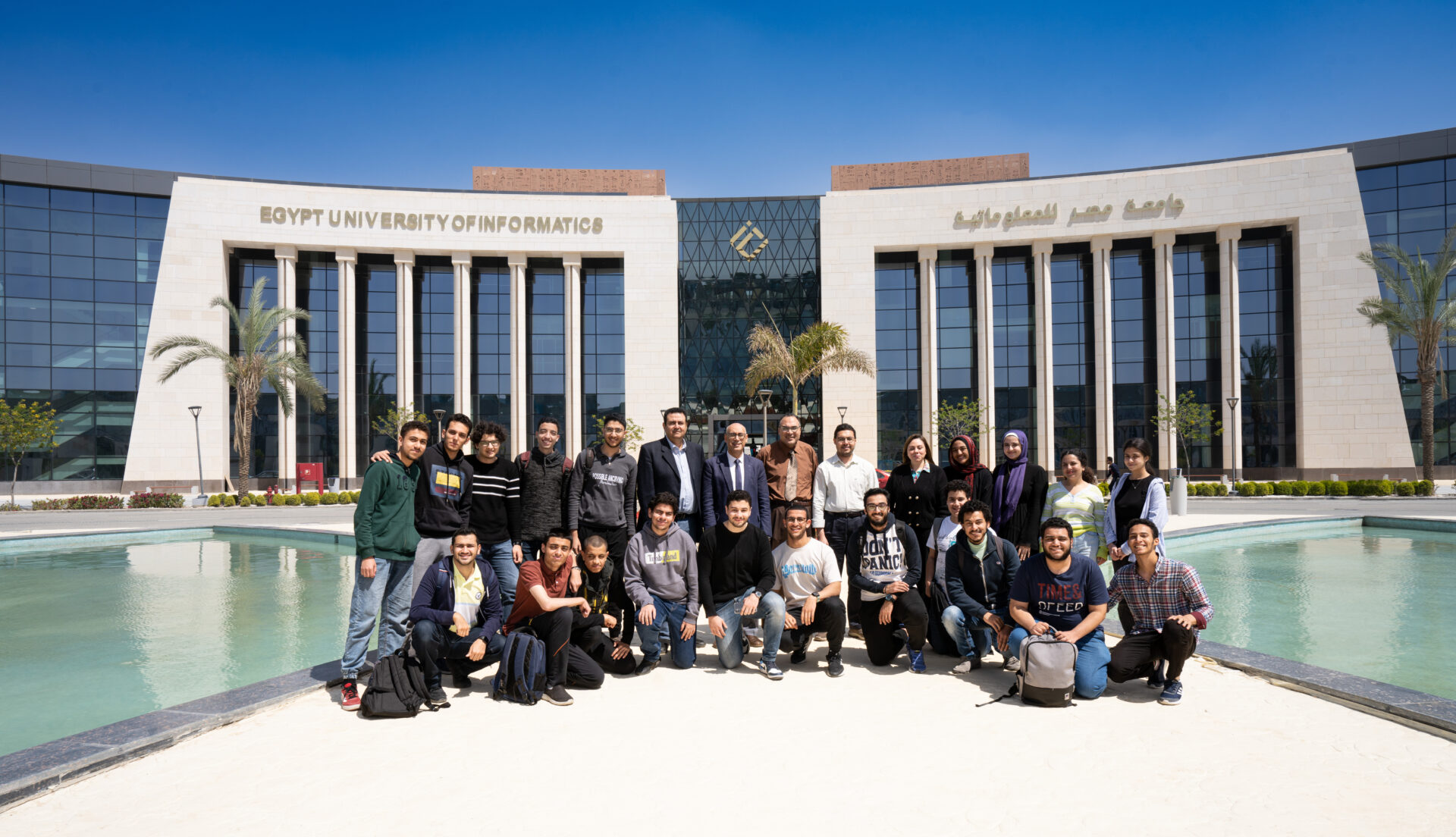


Ahmed Sameh Wins PhD Scholarship for AI Heart Analysis App
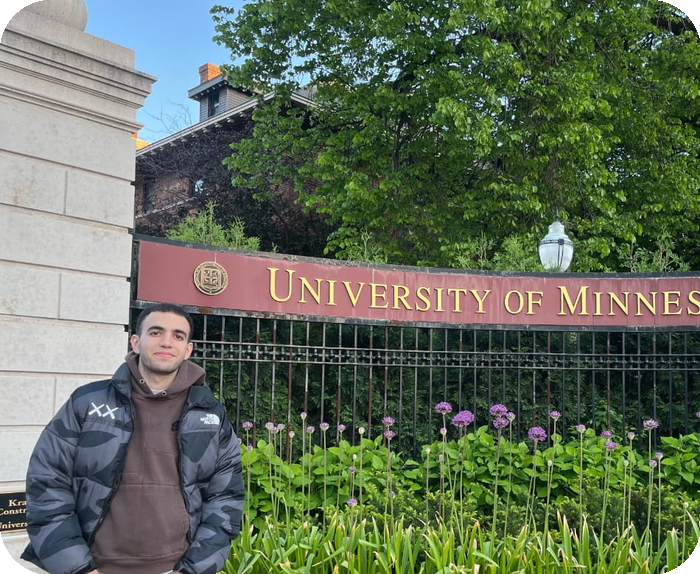
We are proud of Ahmed Sameh, a student at the Faculty of Computing and Information Sciences, for developing an AI-powered application that analyzes cardiac signals for up to 10 continuous minutes — a major leap beyond the few-second windows used by traditional models — significantly improving the accuracy of detecting heart disorders such as atrial fibrillation.
The breakthrough earned Sameh an exceptional full PhD scholarship at the University of Minnesota in the United States, bypassing the master's degree requirement entirely, in recognition of both his application's outstanding results and his research papers published in peer-reviewed American journals specializing in ECG signal measurement and analysis.
The achievement was announced by Prof. Hoda Mokhtar, Dean of the Faculty of Computing and Information Sciences at EUI, who noted that Sameh developed the application while completing his studies at the University of Minnesota through EUI's dual-degree program—an initiative that allows students to spend their final academic year at prestigious international universities.
Prof. Mokhtar emphasized that the accomplishment reflects the advanced academic level EUI students have reached and demonstrates the success of the university's international partnership strategy with leading global institutions.
Sameh confirmed that both his research paper and the application have been accepted for presentation at the IEEE Engineering in Medicine and Biology Conference (EMBC) 2026, scheduled in Toronto, Canada, from July 26 to 30 — one of the most prominent global conferences in biomedical engineering.
He explained that his PhD research will focus on integrating deep learning techniques with healthcare applications, with the goal of developing more advanced tools for ECG signal analysis and leveraging artificial intelligence to improve medical services. The technology also enables the identification of each patient's unique health profile, paving the way for more precise diagnostics, disease prediction, and continuous health monitoring with greater efficiency and reliability.