

Asser Abdel Rahman Attends COP31 Climate Summit Simulation

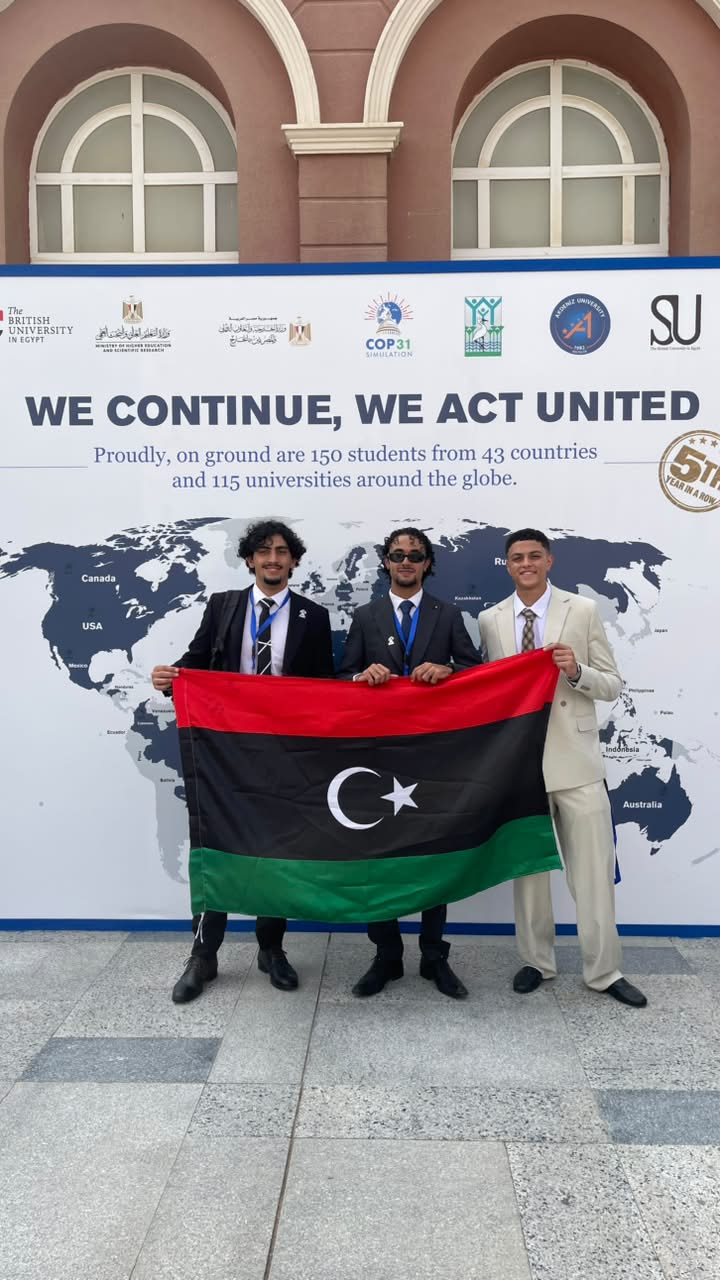
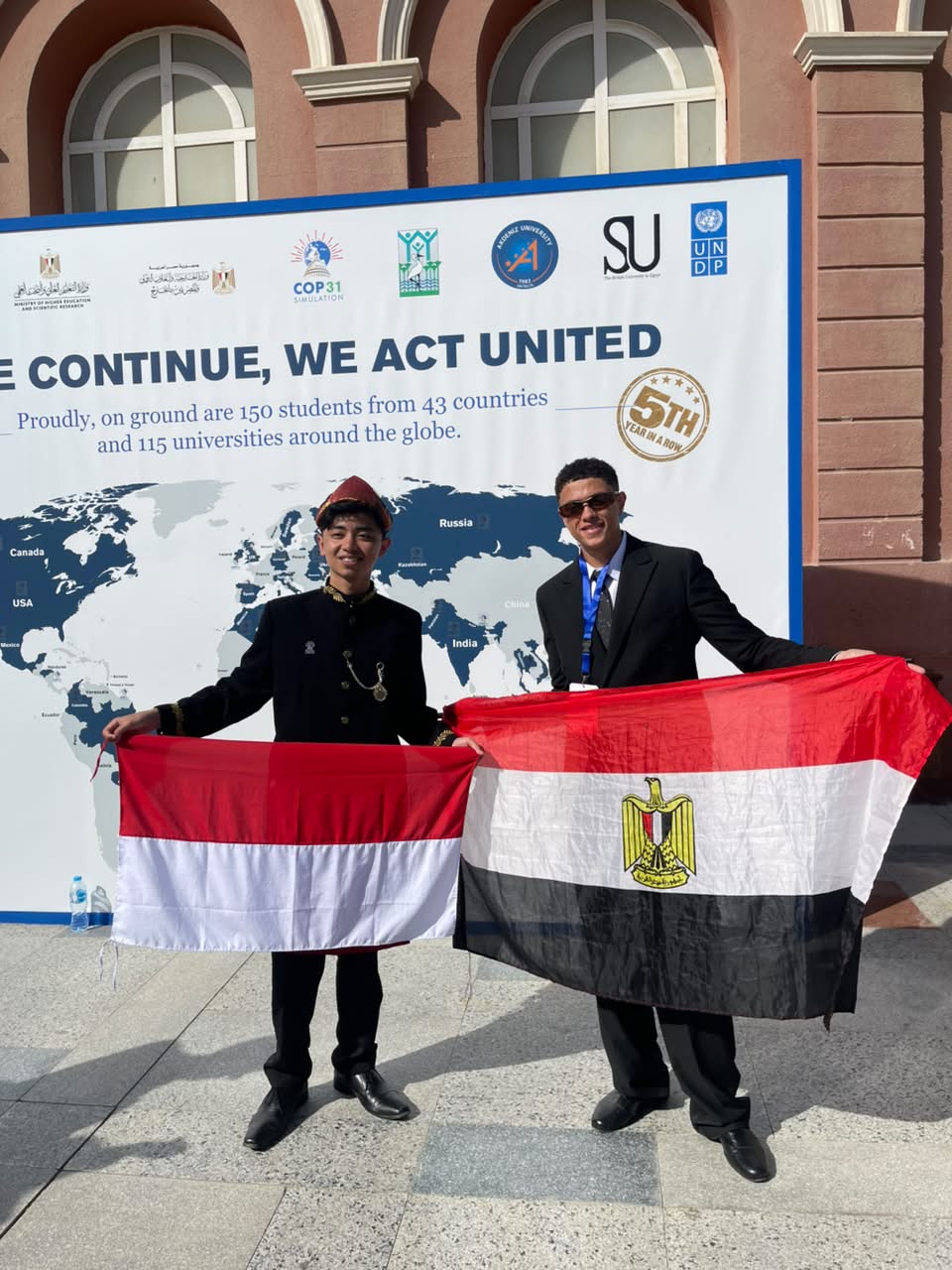
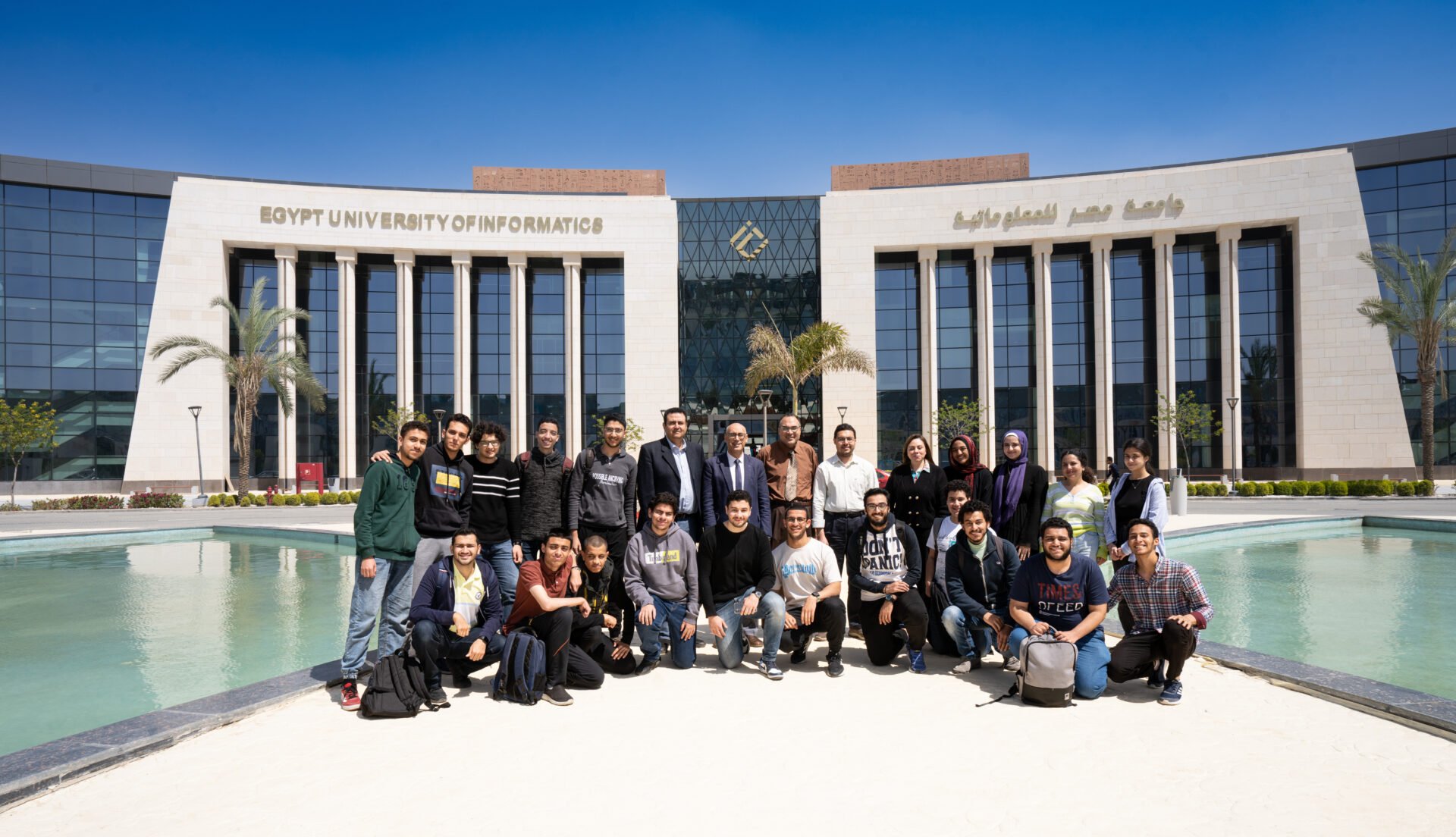
Asser Walid Mohamed Abdel Rahman, a student at the Faculty of Business Informatics at Egypt University of Informatics, authored a working paper proposing a way to resolve the North–South dispute over fair access to advanced technologies. The paper was submitted by the university at the fifth edition of the international COP31 climate summit simulation, held in Cairo and organized by the United Nations Development Programme under the title "Artificial Intelligence and Climate Innovation." The simulation brought together 150 students representing 115 universities from 43 countries, including Algeria, Bahrain, China, the United Kingdom, Indonesia, and Ecuador.
Asser explained that the paper addresses the technology gap in transferring climate AI to developing and environmentally vulnerable countries. AI has exceptional capabilities in forecasting climate change and warning of natural disasters, yet cloud computing infrastructure and climate algorithm models remain largely monopolized by Northern countries, which leaves the least developed countries and island states, the most exposed to climate risks, at a disadvantage. He proposed combining open-source digital repositories with reciprocal regulatory sandboxes, rather than relying on costly commercial intellectual property licenses or non-binding voluntary pledges from major corporations.
The first proposal is a UN-backed open-source repository of digital public goods for climate AI, which would let least developed countries and island states bypass expensive commercial paywalls. It would be jointly managed by the Technology Executive Committee (TEC) and the Climate Technology Centre and Network (CTCN), and would hold open-source climate AI models, specialized algorithms for climate phenomena, and environmental data from around the world. Developing countries could then adapt global models to their own risks, such as precise local rainfall forecasting, or tree-cover monitoring and desertification control. The repository requires UN funding to build the cloud infrastructure and secure the data and servers, and it would spare developing countries' budgets from recurring API licensing fees to commercial companies, in line with the Global Digital Compact.
The second proposal is a set of reciprocal regulatory sandboxes built on a "data for algorithms" principle. These address a severe shortage of environmental data, reaching 71.2% in climate-vulnerable island states such as Tuvalu, Kiribati, the Solomon Islands, and Vanuatu, as well as in desert and arid regions. Under this mechanism, developing countries would provide high-resolution sensor data from their territories, which tackles the problem of "global algorithmic bias." In return, local partners would receive subsidized cloud computing, algorithms tailored to their needs, and fully funded scholarships for their young engineers, who would be required to return and work in national technical agencies and institutions.
Aser also noted that a mandatory international waiver of intellectual property rights for climate AI technologies, modeled on the TRIPS waivers in public health and medicine, faces fierce opposition from major technology-exporting countries such as the United States, the European Union, and the United Kingdom, who cite the protection of innovation and property rights. In his view, this makes consensus at COP31 impossible, and it could paralyze negotiations and trigger legal disputes and regulatory bottlenecks in verification and compliance mechanisms.
Prof. Ahmed Hamad, Acting President of the university, said climate change is receiving growing attention, especially in academic circles working on proposals that use AI and climate-prediction algorithms to bridge the positions of Northern countries and the Southern coalition on the financial and technological burdens of confronting climate change. He said the proposed strategy rests on "equal exchange": the South provides field data, while the North provides computing capacity and funds technical capacity-building, with the CTCN and TEC evaluating technology transfer mechanisms. He added that the university hopes the COP31 technical secretariat will approve presenting the proposal at the summit in Antalya, Türkiye, running from November 9 to 20, following the consensus reached on the paper in the simulation room, where discussion centered on fair access to computing, national data sovereignty, financing, and building local expertise to handle climate issues in developing countries and the most environmentally fragile communities.